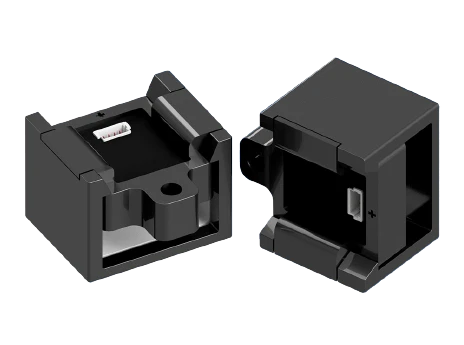


ISB-A-800 Series

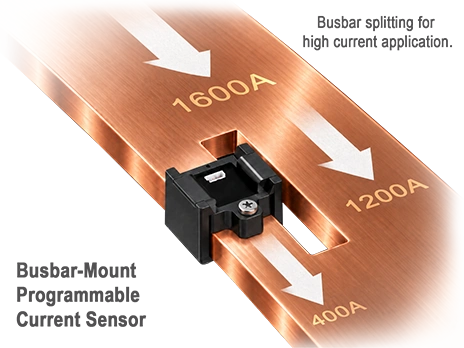
  • Busbar Mount
  • Connector Type
  • Current: ± 670A Max
  • Response Time : 3μs
  • Frequency : 200kHz Max
  • Reference : 50% VDD

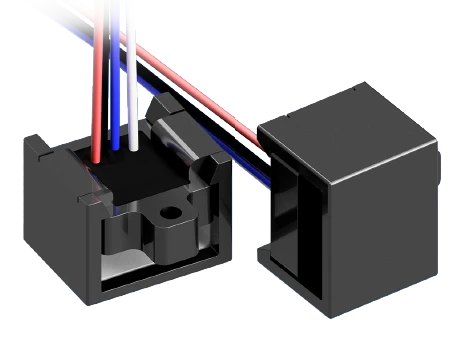
ISB-A-802 Series

  • Busbar Mount
  • Lead-Wire Type
  • Current: ± 670A Max
  • Response Time : 3μs
  • Frequency : 200kHz Max
  • Reference : 50% VDD

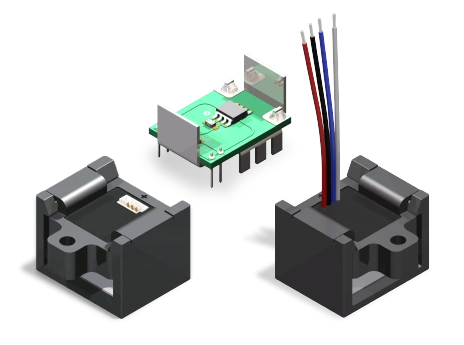
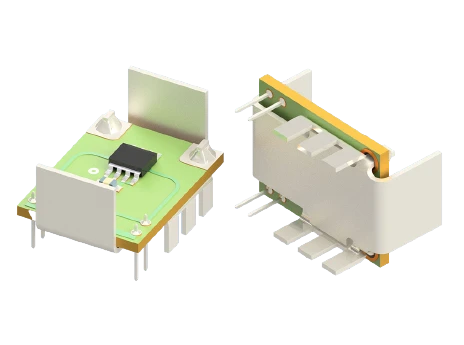
ISE-A-800 Series

  • PCB Mount
  • Terminal Pin Type
  • Current: ± 200A Max
  • Response Time : 3μs
  • Frequency : 200kHz Max
  • Reference : 50% VDD

Technical Highlights

  • Programmable Hall effect sensors for accurate AC and DC current measurement
  • Tailored current ranges for optimized sensitivity and output scaling
  • Analog ratiometric output for direct ADC and microcontroller interfacing
  • Fast response time for real-time control and protection loops
  • Wide bandwidth for dynamic current monitoring
  • High accuracy with low linearity error
  • Compact PCB and busbar mount options for flexible integration
  • Electrically isolated sensing for improved system safety

Typical Applications

  • AC and DC current monitoring in power converters
  • Motor drives and variable frequency drives (VFDs)
  • Battery management systems (BMS) and energy storage
  • DC-DC converters and regulated power stages
  • Renewable energy inverters and solar systems
  • Overcurrent detection and protection circuits
  • Industrial, telecom, and embedded power systems
Part Number Drive Inductance (μH, Min) Turns Ratio (Pri:Sec1:Sec2) DCR (mΩ, Max) ET Product (V-μs, Max) Leakage Inductance (nH, Min) SRF (MHz,Typ) Hi Pot (Drive:Gate)(Vdc) Length (mm, Max) Width (mm, Max) Height (mm, Max) Creepage (mm, Min) Mounting Type Pick & Place TI Product Compatibility Infineon Product Compatibility Samples Availability Mouser Availability
GT02-110-006 Sample 135 1:1 228:45:00 6.9 200 13.3 1500 8.60 6.80 --- SMD green-circle-tick --- --- green-circle-tick green-circle-tick green-circle-tick
GT02-110-006 Sample 136 1:1 228:45:00 10.2 400 13.3 1500 8.60 6.80 --- SMD green-circle-tick --- --- green-circle-tick green-circle-tick green-circle-tick
GT02-110-008 Sample 135 1:1 228:45:00 19.4 500 13.3 1500 8.60 6.80 --- SMD green-circle-tick --- --- green-circle-tick green-circle-tick green-circle-tick
GT02-110-006 Sample 135 1:1 228:45:00 34.6 600 13.3 1500 8.60 6.80 --- SMD green-circle-tick --- --- green-circle-tick green-circle-tick green-circle-tick
GT02-110-014 Sample 135 1:1 228:45:00 12.8 800 13.3 1500 8.60 6.80 --- SMD green-circle-tick --- --- green-circle-tick green-circle-tick green-circle-tick
GT02-110-019 Sample 138 1:1 228:45:00 70.6 200 13.3 1500 8.60 6.80 --- SMD green-circle-tick --- --- green-circle-tick green-circle-tick green-circle-tick
GT02-110-010 Sample 140 1:1 228:45:00 6.9 200 13.3 1500 8.60 6.80 --- SMD green-circle-tick --- --- green-circle-tick green-circle-tick green-circle-tick

Custom Solutions & Capabilities

ICE offers programmable Hall effect current sensors tailored to specific current ranges, sensitivity requirements, and mechanical integration constraints. Calibration parameters, output scaling, bandwidth, and packaging can be configured to meet system-level accuracy and protection goals.

We support both PCB-mount and busbar-mount solutions for AC and DC current monitoring. Whether your application requires enhanced dynamic response, higher current capability, or tailored mechanical form factors, ICE provides precision sensing solutions from concept through production.

Open Request Form
Frequently Asked Questions (FAQs)

How do Hall effect sensors measure DC current?

+

They detect magnetic flux generated by current flow without requiring flux change.

What defines sensor bandwidth?

+

Internal amplifier design and magnetic circuit response.

How does offset voltage impact accuracy?

+

Offset error shifts baseline measurement.

Can these detect bidirectional current?

+

Yes, ratiometric outputs allow ± current measurement.

What limits maximum measurable current?

+

Magnetic core geometry and sensor linear range.

How does temperature drift affect output?

+

Offset and sensitivity can shift with temperature.

What is galvanic isolation rating based on?

+

Internal insulation and package design.

How is response time defined?

+

Time to reach a specified percentage of final output.

Can they replace shunt resistors?

+

Yes, with lower insertion loss and isolation benefits.

Are they suitable for high dI/dt systems?

+

Yes, within specified bandwidth limits.