- Home
- Inductors
- High-Current Ferrite-Bead Power Inductors
- IN SERIES: SMT High-Current Ferrite-Bead Power Inductors
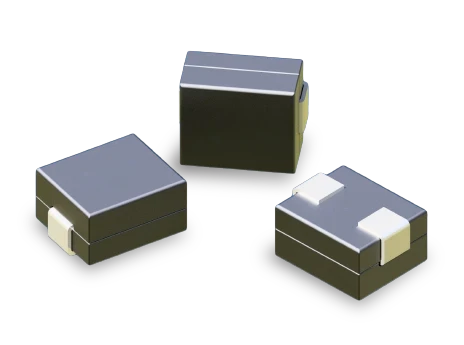
Key Features
- Low DC resistance for efficiency
- High saturation current ratings
- Stable inductance across load ranges
- Compact SMT footprints with low profiles
- Robust thermal performance to 125°C
APPLICATIONS
- CPU/GPU VRM/VRD stages
- Point‑of‑Load (POL) converters
- Servers and HPC systems
- Telecom and networking equipment
- FPGA, ASIC, and memory rails
Electrical Specifications @ 25°C - Operating Temperature Range: -40°C to +125°C
Part Number
Ls (nH)
ISAT @125°C (ADC)
ISAT @25°C (ADC)
DCR (mΩ)
Footprint (mm)
Height (mm)
Shielded
Competition
Part Number
ISAT @25°C (ADC)
Frequently Asked Questions (FAQs)
What are IN Series SMT high-current ferrite-bead power inductors?
IN Series inductors are surface-mount ferrite-core power inductors designed for high-current DC-DC conversion and power regulation applications. They provide stable inductance performance, low DCR, and high saturation current capability in compact SMT package sizes.
What applications are the IN Series inductors designed for?
The IN Series is commonly used in DC-DC converters, voltage regulator modules (VRMs), POL converters, server and telecom equipment, industrial electronics, automotive systems, and high-density power management circuits.
Are IN Series inductors traditional ferrite beads for EMI filtering?
No. IN Series inductors are primarily high-current power inductors used for energy storage and current smoothing in switching regulators. While ferrite-core construction helps reduce switching noise, they are not conventional ferrite beads intended solely for EMI suppression.
What are the advantages of ferrite-core construction in the IN Series?
Ferrite-core construction helps provide low core losses, stable high-frequency performance, efficient current handling, and compact inductor size for modern switching power supply applications.
Why is low DCR important in the IN Series?
Low DC resistance (DCR) helps minimize conduction losses and heat generation during operation. This improves overall efficiency in high-current power supply and voltage regulation circuits.
What does saturation current mean for IN Series inductors?
Saturation current refers to the maximum current the inductor can handle before the inductance value begins to drop significantly. Higher saturation current ratings support stable operation in demanding high-load applications.
Can IN Series inductors support high-frequency switching regulators?
Yes. IN Series SMT inductors are optimized for high-frequency switching applications including synchronous buck converters, POL regulators, and compact DC-DC power designs.
How do IN Series inductors help reduce switching noise?
The ferrite-core structure and stable inductance characteristics help suppress high-frequency ripple and switching noise generated in power conversion circuits, supporting improved system stability and EMI performance.
Are IN Series inductors suitable for compact PCB layouts?
Yes. The IN Series uses compact SMT footprints designed for space-constrained electronic systems and high-density PCB layouts requiring efficient thermal and electrical performance.
Can ICE Components customize IN Series ferrite-bead power inductors?
Yes. ICE Components offers custom IN Series inductor solutions with application-specific inductance ranges, current ratings, dimensions, and electrical characteristics to meet specialized power design requirements.