- Home
- Inductors
- Class D Inductors
- 1D31A Series
Key Features
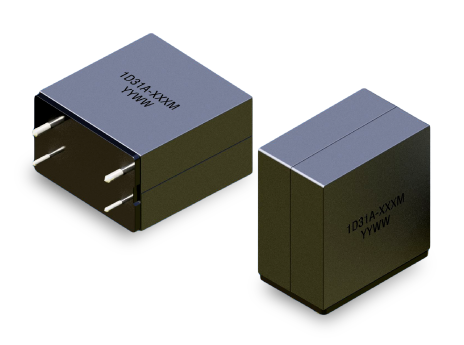
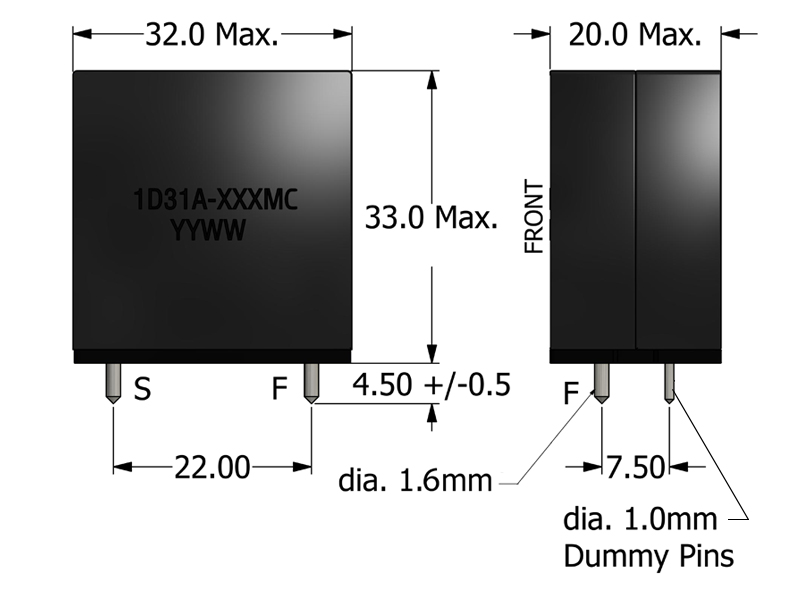
- Compact PCB THT footprint 32.0 × 20.0 mm with 33.0 mm height
- Inductance range 10 – 22 µH for low-frequency and audio-rate filtering
- Shielded ferrite-core construction reducing EMI and stray flux
- Low-DCR winding improving efficiency and reducing power loss
- SRF range approx. 10 – 19 MHz depending on inductance variant
- Through-hole package enabling durable mounting and easy assembly
Applications
- Output filters and chokes for Class-D audio amplifiers
- Low-frequency power-supply filtering and rail stabilization
- EMI-reduced audio and mixed-signal equipment
- Embedded or industrial systems needing stable low-frequency inductance
- General-purpose filtering in low-frequency DC/DC output stages
- Output filters and chokes for Class-D audio amplifiers
- Low-frequency power-supply filtering and rail stabilization
- EMI-reduced audio and mixed-signal equipment
- Embedded or industrial systems needing stable low-frequency inductance
- General-purpose filtering in low-frequency DC/DC output stages
Electrical Specifications @ 25°C - Operating Temperature Range1: -40°C to +130°C
Part Number
Inductance2
(μH, ±20%)
DCR (mΩ,Max)
ISAT3 (ADC)
IDC4 (ADC)
SRF6
(MHz, Typ)
Mechanical Drawing
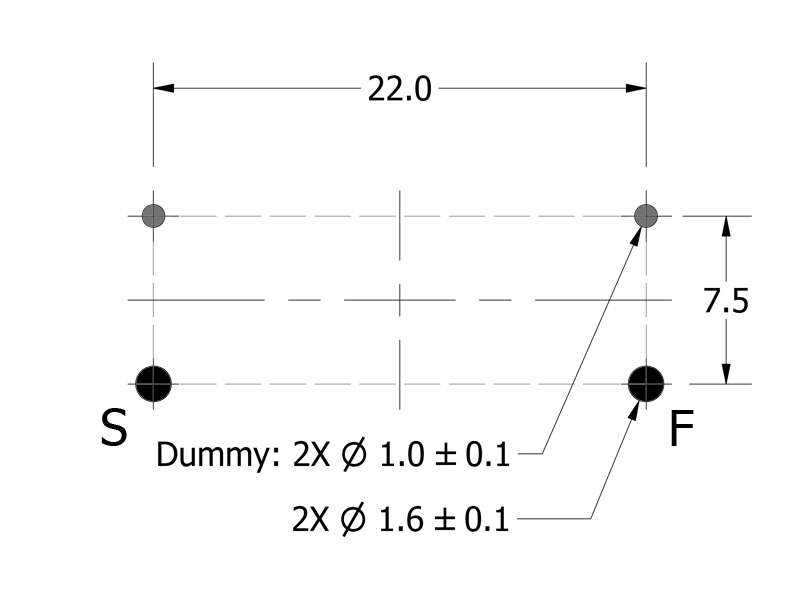
Mounting Dimensions
Schematic

-
Operating Temp. Range: The combination of ambient temperature and temperature rise.
-
Inductance: Tested at 100kHz, 1 VRMS, Series.
-
ISAT: DC current through the winding to cause a 25% (typ) drop in inductance.
-
IDC: DC current through the winding to cause a 40°C (typ) temperature rise at 25°C ambient.
-
Flammability Standard: Meets UL 94V-0.
-
SRF: Values are for reference only.
-
Packaging
- Pieces/Tray: 40
- Trays/Box: 4
- Pieces/Box: 160
-
Specifications subject to change without prior notice.
Frequently Asked Questions (FAQs)
What inductance values does the 1D31A Series offer?
The series includes 10 µH, 12 µH, 15 µH, 18 µH, and 22 µH options (±20%). Selecting a higher value improves ripple attenuation, while lower values provide faster transient response.
What are the typical current and saturation levels?
Depending on the variant, saturation currents range from ~31 – 50 A, with continuous current ratings around 12 A for a 40 °C rise. This fits audio filtering and moderate DC rails.
What does the SRF range (10–19 MHz) indicate for real use?
The reference SRF range defines where parasitic capacitance begins to dominate. Since SRF is far above audio and low-frequency supply ranges, 1D31A behaves predictably within intended operating frequencies.
Why choose a shielded inductor for audio applications?
Shielding reduces magnetic leakage, preventing noise coupling into nearby analog or digital circuits — essential for maintaining audio fidelity and EMI compliance.
Is the 1D31A suitable for high-frequency switching converters?
No — its inductance range and core material are optimized for low-frequency filtering, not MHz-speed switching.
What are key layout considerations?
Use wide copper traces, support thermal dissipation, minimize loop area, and ensure adequate solder anchoring due to the component’s size.
How does low DCR improve system performance?
Low DCR minimizes conduction losses, improving efficiency and maintaining lower temperatures under sustained load.
What mechanical benefits does the large THT package offer?
Strong mechanical anchoring and vibration resistance — ideal for large audio amplifiers, industrial equipment, and power modules.
What non-audio applications can 1D31A support?
Low-frequency filtering in embedded systems, industrial controls, DC rail smoothing, and analog or mixed-signal electronics.
What parameters should engineers evaluate before selecting a model?
Inductance, DCR, SRF margin, saturation current, thermal limits, footprint constraints, and ripple-current behavior.