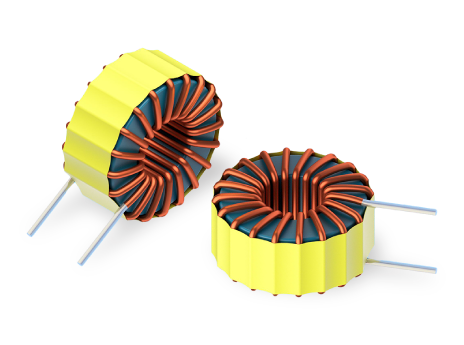
Key Features
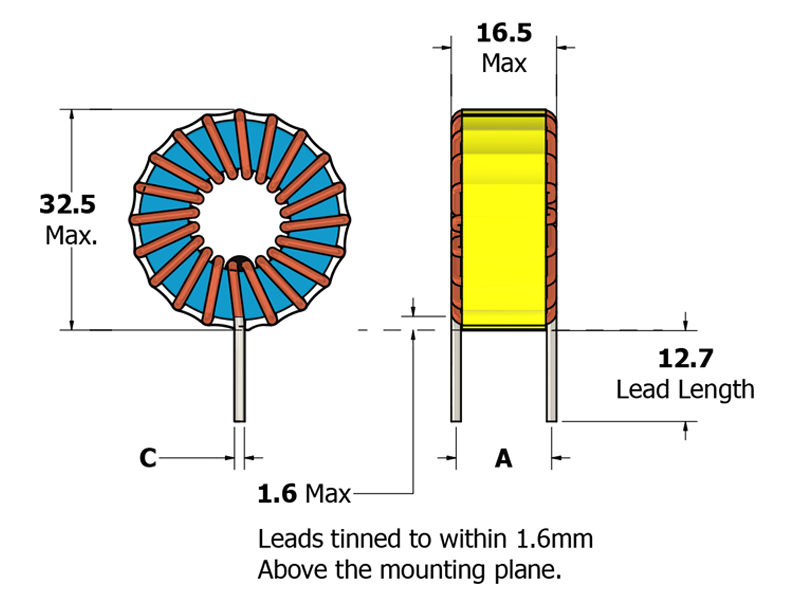
- PCB footprint up to 32.5 × 16.5 mm max, height up to 32.5 mm max
- Inductance range from 10 µH to 1000 µH for storage and filtering flexibility
- Rated currents up to 20 A with low DCR for high efficiency
- Powdered-iron toroidal core providing soft, gradual saturation under DC bias
- Self-shielding toroidal geometry minimizing EMI radiation
- Through-hole construction offering robust mechanical stability in power designs
APPLICATIONS
- Buck/boost converters and general DC/DC power stages
- SMPS energy-storage and output-filter inductors
- EMI-suppression chokes in noise-sensitive electronics
- Industrial and telecom power rails requiring high-current inductors
- Embedded systems needing stable magnetics under load
- Buck/boost converters and general DC/DC power stages
- SMPS energy-storage and output-filter inductors
- EMI-suppression chokes in noise-sensitive electronics
- Industrial and telecom power rails requiring high-current inductors
- Embedded systems needing stable magnetics under load
Electrical Specifications @ 25°C - Operating Temperature Range1: -40°C to +105°C
Part Number
L @ 0A 2
(uH, +/-15%)
IDC 3
(A)
L @ IDC 2
(uH, +/-15%)
DCR
(Ω, Max.)
K Factor 4
Dim A
(mm, Nom.)
Dim B
(mm, Nom.)
Part Number
L @ 0A 2
(uH, +/-15%)
Mechanical Drawing
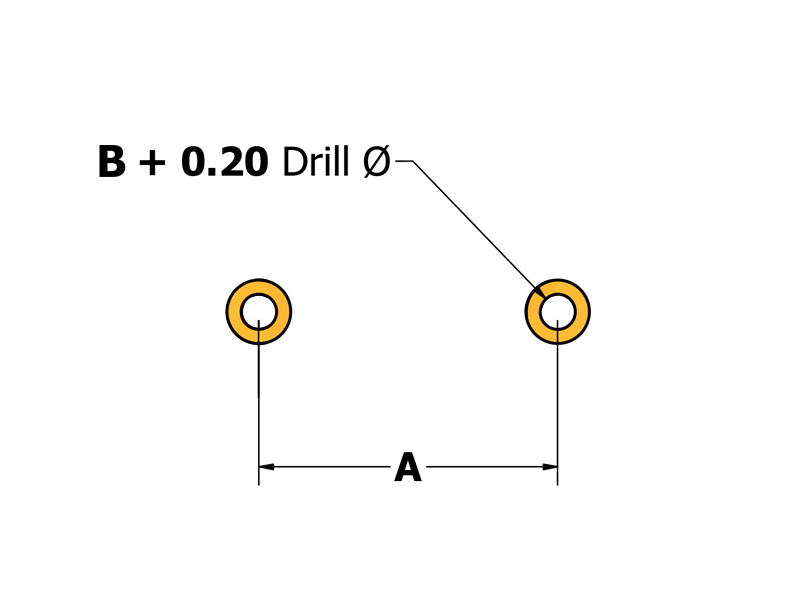
Recommended PCB Layout
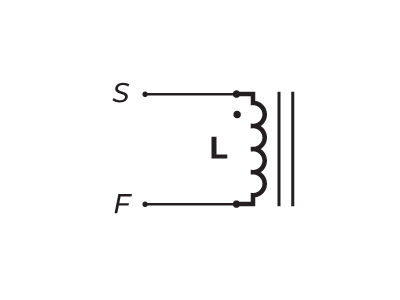
Schematic
-
Operating Temp. Range: The combination of ambient temperature and temperature rise.
-
Inductance: Tested at 10kHz, 30 – 301 mVRMS, Series
-
Idc: Current to cause 30°C max temperature rise.
-
DC Bias Inductance Calculation:
-
All components have passed the ICE Reliability Standard testing. For further information, please contact ICE directly.
-
PACKAGING
-
Pieces/Box: 30
-
Boxes/Carton: 12
-
Pieces/Carton: 360
-
-
Specifications subject to change without prior notice.
Frequently Asked Questions (FAQs)
What is the ITP Series designed for?
The ITP Series is built for high-current power applications such as DC/DC converters, power supplies, inverters, and renewable-energy systems. Its toroidal core and single-winding design make it suitable for EMI filtering, output filtering, and energy storage in high-current circuits.
What range of inductance and current does ITP cover?
The series offers inductance values from small µH up to ~1000 µH, supporting current ratings up to ~20 A (depending on the part). This variety allows designers to choose an inductor optimized for either high current or higher inductance depending on their circuit’s needs.
How does the toroidal core help performance compared to other inductor types?
Toroidal cores inherently confine magnetic flux within the core, reducing electromagnetic radiation and minimizing interference with other components on the PCB. This helps lower EMI and makes the ITP Series especially suited for noise-sensitive power circuits or compact layouts.
What are the thermal and environmental limits for ITP inductors?
They are rated for operation from –40 °C to +105 °C, and the core and winding materials meet flame-resistance standards (UL-94 V-0). They’re suitable for use in industrial temperature ranges and harsh environments where reliability under thermal stress is required.
Are ITP inductors suitable for SMPS (switch-mode power supply) output filtering?
Yes — the ITP Series is appropriate for SMPS output filtering because of its high current handling, soft saturation behavior, and low core loss. They help smooth DC output and filter ripple, making them effective for buck, boost, and other converter topologies.
What design parameters should be checked when selecting an ITP inductor for a circuit?
Important parameters to consider are: needed inductance, maximum load current, DC resistance (DCR), saturation performance under load, available PCB space for the toroid, and ripple/impedance requirements based on switching frequency and converter topology.
Does the inductance change significantly under DC bias?
Because the ITP Series uses a distributed air-gap toroidal core, inductance roll-off under DC bias is gradual. This provides stable performance at high currents and helps maintain predictable behavior in power-supply and filter applications.
What kind of mounting and mechanical stability does ITP provide?
The ITP Series uses through-hole leads, offering strong mechanical anchoring — suitable for applications subject to vibration or mechanical stress. This makes them reliable for industrial, automotive, or portable power-system use.
How does using a toroidal inductor benefit EMI performance?
The toroidal geometry confines magnetic fields within the core, reducing stray flux and minimizing radiated EMI. This helps meet EMI compliance and reduces interference in nearby sensitive circuits, beneficial in dense PCB designs or mixed-signal environments.
When is it better to use ITP over other inductor types?
ITP is often the best choice when a design demands high current, low EMI, robust thermal behavior, and compact magnetic components — such as in industrial converters, inverter output filters, energy storage systems, or any power supply where efficiency, noise suppression, and reliability are priorities.