- Home
- Inductors
- Class-D Ferrite-Core Power Inductors
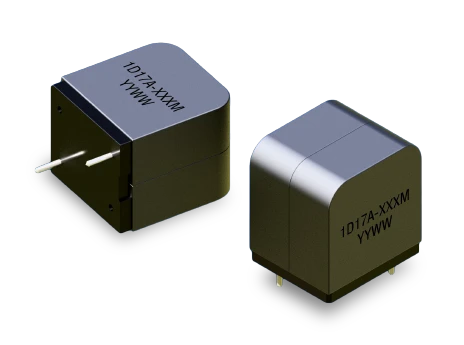
- 1D17A SERIES: THT Class-D Ferrite-Core Power Inductors
Key Features
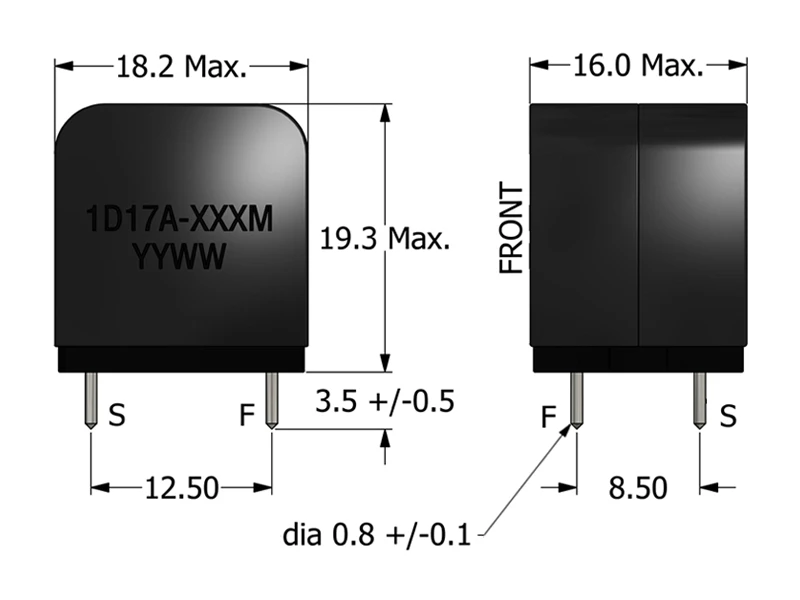
- Compact PCB THT footprint 18.2 × 16.0 mm with 19.3 mm height
- Inductance range 10 – 33 µH for low-frequency and audio-rate filtering
- Shielded ferrite core design reducing EMI and stray flux
- Low-DCR winding minimizing conduction losses under load
- SRF range approx. 17.1 – 26.8 MHz depending on inductance variant
- Through-hole package enabling durable mounting and easy assembly
Applications
- Output filters and chokes for Class-D audio amplifiers
- Low-frequency power-supply filtering and ripple smoothing
- DC supply smoothing in small or medium power supplies
- Embedded and audio-grade equipment requiring shielded inductors
- General-purpose inductive filtering in low-frequency converter circuits
Electrical Specifications @ 25°C - Operating Temperature Range1: -40°C to +130°C
Part Number
Inductance2
(μH, ±20%)
DCR (mΩ,Max)
ISAT3 (ADC)
IDC4 (ADC)
SRF6 (MHz, Typ)
Mechanical Drawing
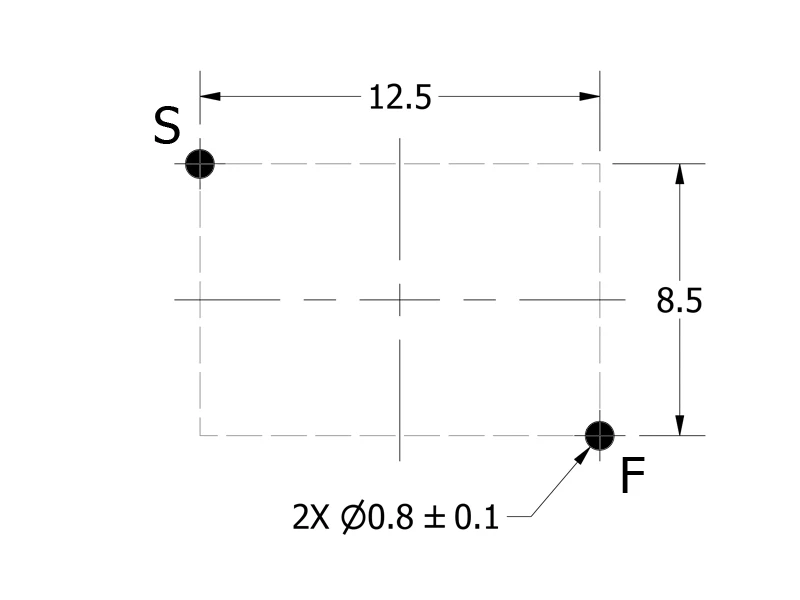
Mounting Dimensions
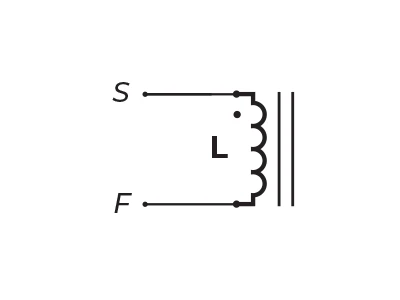
Schematic
-
Operating Temp. Range: The combination of ambient temperature and temperature rise.
-
Inductance: Tested at 1kHz, 1 VRMS, Series.
-
ISAT: DC current through the winding to cause a 10% (typ) drop in inductance.
-
IDC: DC current through the winding to cause a 40°C (typ) temperature rise at 25°C ambient.
-
Flammability Standard: Meets UL 94V-0.
-
SRF: Values are for reference only.
-
Packaging
- Pieces/Tray: 91
- Trays/Box: 6
- Pieces/Box: 546
-
Specifications subject to change without prior notice.
Frequently Asked Questions (FAQs)
What inductance values and tolerances does 1D17A provide?
1D17A offers 10 µH, 15 µH, 22 µH, and 33 µH variants with ±20% tolerance, allowing designers to trade off between ripple suppression and transient response based on application needs.
What is the saturation current and typical current rating for 1D17A?
Depending on the variant, ISAT ranges from about 10–31 A, while the current that causes a 40 °C rise (I_DC) is about 6 A for most variants — suitable for audio output filters and moderate power rails, but not for very high current switching rails.
What does the SRF specification mean for practical use?
The reference SRF (Self-Resonant Frequency) range defines the estimated upper frequency at which the inductor remains inductive; 1D17A’s SRF (~17–27 MHz) ensures stable performance at audio and low-frequency power-supply frequencies, with minimal parasitic effects.
How does shielding benefit audio and sensitive circuits using 1D17A?
Shielding reduces magnetic leakage and radiated EMI, which helps prevent interference, cross-talk and noise in sensitive audio and mixed-signal circuits. Good layout practices further improve performance.
Is 1D17A recommended for high-frequency switching converters?
No — 1D17A is optimized for low-frequency/audio-rate filtering and rail stabilization. Its inductance and current ratings make it less suitable for MHz-class switching rails.
What mounting advantages does through-hole offer for 1D17A?
Through-hole construction gives strong mechanical anchoring, robust solder joints, and better handling of vibration or mechanical stress — ideal for chassis-mount or durable audio/power assemblies.
How does low DCR affect efficiency and heat generation?
Lower DCR reduces copper losses under load, helping maintain efficiency and keeping temperature rise manageable, which is critical for continuous power or audio applications.
What trade-offs should designers be aware of when using 1D17A?
While 1D17A offers shielding, stable inductance, and moderate current ratings, its relatively high inductance and modest current capacity limit its use in high-current, high-frequency switching applications.
For what kind of power supplies or audio systems is 1D17A ideal?
Class-D audio amplifiers, low-current DC rails, embedded devices, audio peripherals, and any system requiring stable low-frequency filtering with EMI suppression.
What design parameters should be checked when selecting a 1D17A part?
Inductance value (for required filtering), current draw (average and peak), ripple current, PCB footprint and layout constraints, EMI sensitivity, and headroom vs. SRF to ensure stable operation.