- Home
- Inductors
- Class-D Ferrite-Core Power Inductors
- 1D10A SERIES: THT Class-D Ferrite-Core Power Inductors
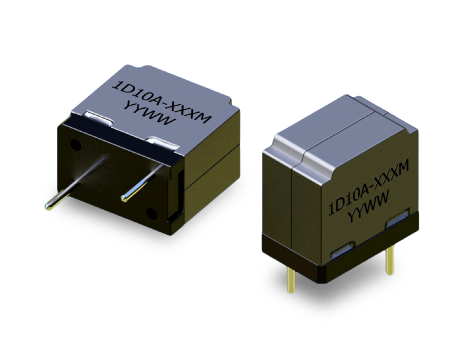
Key Features
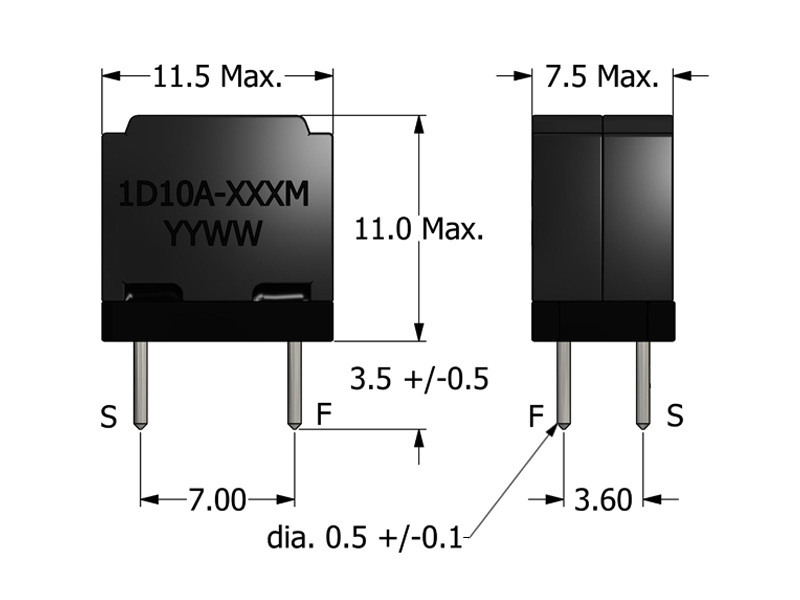
- Compact PCB THT footprint 11.5 × 7.5 mm with 11.0 mm height
- Inductance range 10 – 33 µH for audio filtering and power stabilization
- Shielded ferrite core design reducing EMI and stray flux
- Low DCR winding supporting efficient current delivery
- SRF range approx. 16.7 – 31.5 MHz depending on inductance value
- Through-hole package providing secure mounting and easy assembly
Applications
- Class-D audio amplifier output filters and chokes
- Low-frequency power-supply filtering and ripple smoothing
- Rail stabilization for compact DC-powered systems
- Embedded audio or control boards requiring low-EMI inductors
- General-purpose filtering in low-frequency DC/DC converters
- Class-D audio amplifier output filters and chokes
- Low-frequency power-supply filtering and ripple smoothing
- Rail stabilization for compact DC-powered systems
- Embedded audio or control boards requiring low-EMI inductors
- General-purpose filtering in low-frequency DC/DC converters
Electrical Specifications @ 25°C - Operating Temperature Range1 Operating Temperature Range: The combination of ambient temperature and temperature rise. : -40°C to +130°C
Part Number
Inductance 2
(μH, ±20%)
DCR
(mΩ,Max)
ISAT 3
(ADC)
IDC4
(ADC)
SRF 6 (MHz, Typ)
Mechanical Drawing
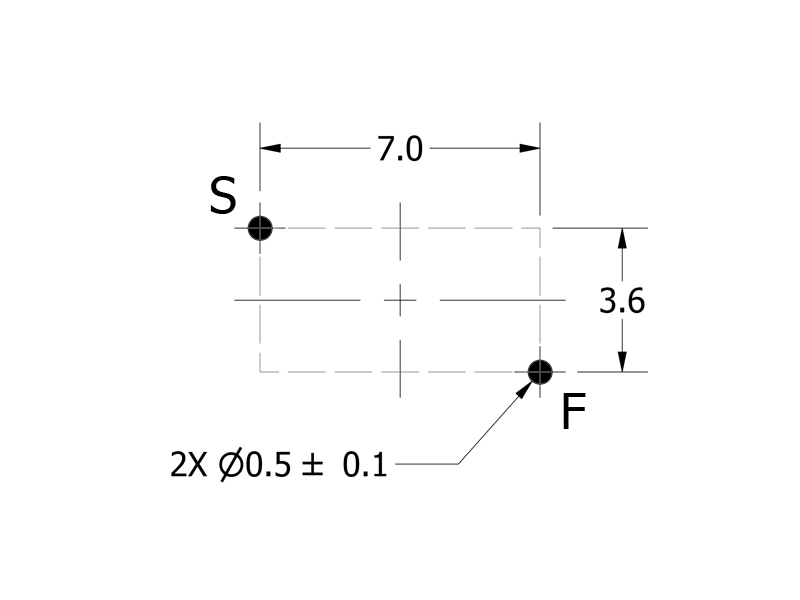
Mounting Dimensions
Schematic Diagram

-
Operating Temperature Range: The combination of ambient temperature and temperature rise.
-
Inductance: Tested at 1kHz, 1 VRMS, Series.
-
ISAT: DC current through the winding to cause a 10% (typ) drop in inductance.
-
IDC: DC current through the winding to cause a 40°C (typ) temperature rise at 25°C ambient.
-
Flammability Standard: Meets UL 94V-0.
-
SRF: Values are for reference only.
-
Packaging
- Pieces/Tray: 190
- Trays/Box: 12
- Pieces/Box: 2280
-
Specifications subject to change without prior notice.
Frequently Asked Questions (FAQs)
How does inductance choice (10–33 µH) affect audio and low-frequency performance?
Higher inductance values (22–33 µH) provide stronger output filtering and smoother current in audio or DC rails, while lower values (10–15 µH) yield faster response and lower impedance — useful for Class-D outputs or transient-heavy circuits.
Why is shielding important for 1D10A inductors?
Shielding reduces magnetic leakage, preventing interference with nearby components, improving audio fidelity, and helping reduce noise in compact layouts.
What does the SRF range (16.7 – 31.5 MHz) indicate?
The reference SRF range defines where the inductor transitions from inductive to capacitive behavior. Since LPF and audio circuits operate well below SRF, the 1D10A Series maintains stable inductance and minimal parasitics in its intended frequency range.
What are the practical current limits of the 1D10A Series?
Depending on inductance, saturation occurs between 2–7.5 A, and thermal rise begins around 4.5 A. This suits audio output filters and low-frequency power conditioning rather than high-current switching.
Is 1D10A suitable for high-frequency switching converters?
Not recommended — its inductance, core type, and SRF make it ideal for low-frequency or audio-rate applications, not MHz-class switching.
How does through-hole mounting benefit power or audio designs?
THT components provide strong mechanical anchoring, reduce vibration sensitivity, and make manual or low-volume assembly straightforward.
What impact does ferrite core material have?
Ferrite offers low core loss at low frequencies, maintains inductance stability, and provides inherent EMI suppression — beneficial for audio output filters.
Does inductance tolerance (±20%) affect circuit behavior?
Yes — in filters or tuned networks, designers may need to adjust capacitor values or allow margin, especially when targeting specific cutoff frequencies.
Can 1D10A be used for small DC supplies or battery systems?
Yes — when low-current filtering or ripple suppression is needed in compact, low-frequency circuits.
What key parameters should engineers evaluate when selecting a 1D10A value?
Consider target ripple, cutoff frequency, load current, allowable voltage drop, SRF margin, PCB space, and shielding needs.